Groups are Scary (and This is a Problem for Member Organizations)
You try an icebreaker activity, and people seem reluctant. You ask for a volunteer to share an idea, and everyone looks down at the table. You ask if there are any questions, and no one raises their hand.
No peeps plus some awkward nervousness. What is going on?
In a recent program, I asked, “How many strangers in a group make it difficult for most people to speak up?” 72 people weighed in, and 87% said 15 people or fewer.
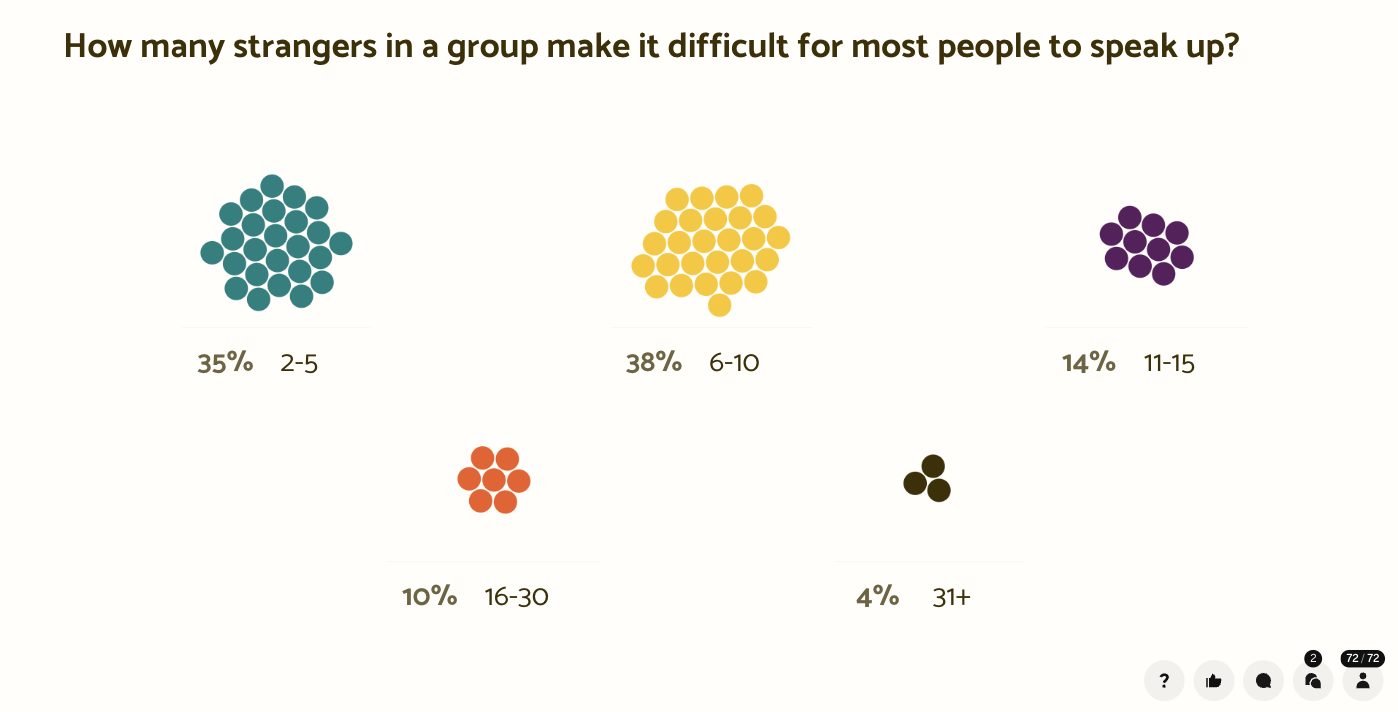
Think about most of your meetings or events. There are likely more than 15 people. The same goes for attendees of virtual programs: they know more than 15 people are viewing their chat comments. The potential audience for article comments, social comments, and online community posts is also over 15 people.
And 15 is the higher threshold. For 73%, it is 10 or fewer people.
We, humans, seem to have a psychological barrier that makes groups of strangers (whether 5, 14, or more) seem scary, and therefore, to stay safe, we might act small and unnoticeable and stay quiet.
The problem is that this quietness deprives individual members of learning and networking opportunities and deprives the community of great ideas.
What you need are groups that feel safe in your member organization. Scary fear closes everyone down, while warm, supportive safety opens everyone up.
We need to create psychological safety. Amy Edmonson, a researcher and Harvard Professor, says, “Psychological safety is the belief that one will not be punished or humiliated for speaking up with ideas, questions, concerns, or mistakes, and that the team is safe for interpersonal risk taking."
Here are some ideas for infusing more psychological safety in your events, groups, meetings, and conversations.
Create an environment outside their professional operating environment. What is the vibe like in your profession or industry? Are your academics used to getting holes poked in their ideas? Are your CEOs, doctors, or attorneys used to upholding a certain image? No matter how your members act in their day jobs, they are people too.
Invite people to talk to their neighbor in 2’s or 3’s about a topic that is related to the main topic by a deviation or two. Want to talk about how to get more young professionals into the industry or profession? Ask them to share stories about their oddest first job. Not only can a question like this capture their attention, but it also sets the tone by pulling them out of their everyday life into a new environment.
Make some agreements. Competitors might feel all awkward when other competitors are in the room, but you know what? They are dealing with the same issues, so who better to solve some problems with?
No, competitors don’t have to share the formula for their latest anti-aging widget. But competitors can talk about a whole host of non-proprietary issues, and to feel safe, help the group make some agreements. See how one association does this with their Pledge and Commitment.
Focus on the first 5 minutes. First impressions shape the rest of the event. How you welcome people into the venue and how you start the event sets the stage for what comes after.
Warmly welcome people at registration, and they’ll feel those first happy twinges of belonging. Try an unofficial start to give early birds something to do and a way to get more comfortable before the meeting (see “start before the start”). And start with an activity. Flip the script of passively watching and listening to a sage on the stage. Instead, let your members explore the topic with their neighbors. When they actively participate early, they are more likely to participate later on.